
Dentures – Mount Pleasant, SC
Reclaim Your Complete Smile
Missing teeth cause a host of problems, including the completion of certain daily activities, like eating, speaking, and smiling. The good news is that you do not need to settle for tooth loss. Advancements in dental materials and technology have made it possible for you to reclaim your complete smile. At Smile Carolina Dental Group, we provide lifelike dentures to give you your smile back. To learn more about dentures in Mount Pleasant, SC or to get started with an initial consultation, just give us a call!
Why Choose Smile Carolina Dental Group for Dentures?
- Implant Dentures Available In-House
- All-Digital Dental Impressions
- Dental Insurance Welcome & Flexible Financing Offered
Who’s a Good Candidate for Dentures?

Whether you’re missing a few teeth or all of your teeth, pretty much anyone who has suffered from tooth loss can get dentures. During your consultation with us, we can discuss whether or not this is the ideal tooth replacement option for you. Even if you don’t make a great candidate right away, this doesn’t always mean that dentures can’t be in your future. By restoring the health of your gum tissue and bone structure, they could be a viable option later on.
Effects of Missing Teeth
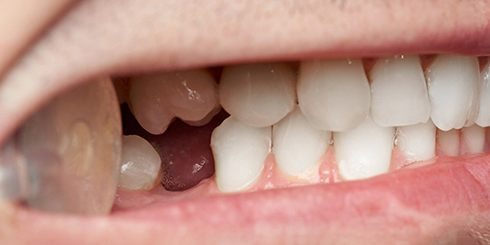
There are all sorts of different ways that tooth loss can occur. According to the American College of Prosthodontists, the common causes of missing teeth include tooth decay, gum disease, and trauma, like an accident or injury. Tooth loss can lead to a variety of negative consequences over time. Here are just a few of them:
- Facial Sagging: If you don’t have any teeth, your facial muscles aren’t being supported how they should. Your cheeks can appear sunken in and your lips can wrinkled. This can leave you looking much older than you actually are.
- Difficulty Speaking: When you’re missing teeth, it can become difficult to enunciate your words, making it harder for others to understand you.
- Trouble Eating: If you can’t chew harder foods, you are leaving out items that contain essential vitamins and minerals.
- Reduces Confidence: Having gaps in your smile can take a toll on your self-confidence, therefore negatively impacting your social and work life.
What Qualifies You for Dentures?
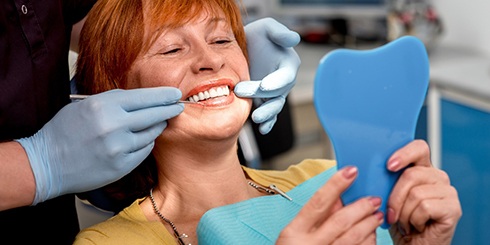
If you have experienced significant tooth loss or have lots of damaged teeth, you could be a candidate for dentures. Just like any tooth replacement option, wearing dentures requires that you are committed to your oral hygiene routine. It’s crucial that you are committed to caring for your restoration and your oral health.
The number of teeth that you’re missing will determine which type of denture is ideal to meet your needs. Overall, dentures are more affordable than other methods, making them ideal for patients who are unable to invest lots of money into their smile.
Alternative Tooth-Replacement Options
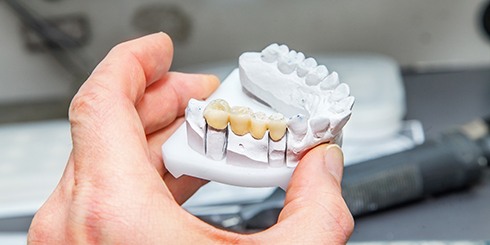
In addition to dentures, people who have suffered from tooth loss can explore the following tooth replacement options:
- Dental Bridges: Dental bridges are ideal for patients who are only missing one or a few teeth. Just like the name entails, a dental bridge “bridges” the gap where you are missing your tooth. They require healthy adjacent teeth for support.
- Dental Implants: A dental implant is a titanium post that is inserted into the jawbone. An attachment tooth is attached to the end of the implant as a permanent tooth replacement method. For this procedure, patients are required to have sufficient jawbone tissue.
Learn More About Dental Bridges
Learn More About Dental Implants
Types of Dentures
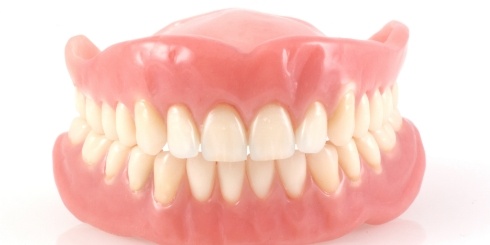
There are several different types of dentures out there to fulfill your needs. During your consultation, we will discuss which one is right for you. Here are the ones available:
Partial Dentures
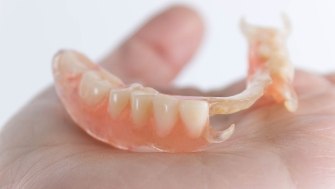
A partial denture, commonly referred to as a partial, consists of multiple teeth on a gum-colored base. The teeth are not all in a row. The restoration is instead designed to fit like a puzzle piece with your existing teeth to fill in the gaps. A partial is normally secured with clips or brackets, but unlike a bridge, a partial is removable for easy cleaning.
Full Dentures
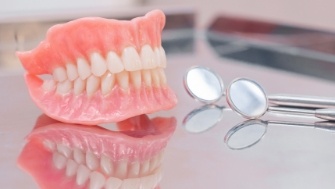
A full denture is a complete top or bottom row of teeth mounted on a gum-colored base. They are designed to restore an entire arch of missing teeth and are held in by the shape and suction of the gums, but denture adhesive can also be used for additional security.
Implant Dentures
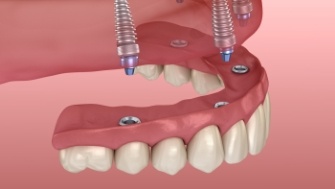
If you are looking for a longer-lasting, more secure tooth replacement option, dental implant dentures may be the answer. A series of titanium, screw-like implants are placed throughout the jawbone during a brief surgical procedure. These will hold your dentures firmly in place. This type of denture allows for additional chewing power and prevents bone loss from occurring over time.
Benefits of Dentures

Missing one, several, or all of your teeth can pose quite a challenge to your everyday life. It can make simple tasks like eating, speaking, or smiling incredibly difficult. By restoring your grin with dentures, you can greatly improve your quality of life! Not only will they boost your confidence, but they will make you forget that you ever suffered from tooth loss in the first place. There are all sorts of benefits that you can expect to experience when you choose dentures as a tooth replacement option. Below, you can learn about some of the most prominent ones.
Psychological Benefits

Tooth loss can have a significant impact on your confidence and quality of life. Edentulous people (people without teeth) typically end up experiencing an increased risk of social anxiety, sadness, and even depression. With dentures, you don’t have to worry about how you look when you talk or laugh. You’ll be able to eat and speak with complete confidence once again!
Clearer Enunciation

Having gaps in your smile can make it hard to pronounce and enunciate certain words. You may not realize it, but your lips and tongue interact with your teeth to perform the proper speech. Without most of your pearly whites, it can be hard to communicate effectively. Luckily, dentures restore your grin and make it easier for you to talk with others. It could take some practice, but you’ll be speaking fluently in no time.
Improves Nutrition

Losing any number of teeth can affect more than just the appearance of your smile – it can have an impact on your diet as well. Without teeth, you will not be able to chew your favorite foods like you used to. As such, you might experience problems like indigestion and malnutrition. With dentures, you can regain chewing power and expand your diet for more nutritious options! You’ll even be able to enjoy meals that contain essential nutrients to promote optimal oral and overall health.
Preserves Oral Health

If you still have some remaining natural teeth, they could begin to shift out of place to fill in the gap in your smile. A tooth-replacement option like dentures can prevent further tooth loss and jawbone resorption. Since dentures can withstand the pressure of more chewing, they allow you to avoid further wear and tear of your natural teeth.
Expands Opportunity

You may be surprised to learn that your smile is one of the first things people notice about you! Whether it’s a job interview or a first date, making a good first impression is crucial. According to a 2019 study, poor oral health is closely associated with the probability of being unemployed. By transforming your smile with dentures, you boost your career and personal opportunities in the long run!
How Dentures Are Made

Are you thinking about getting dentures? You may be wondering what this process looks like. When you understand the process involved in the creation of your dentures, this will help you to appreciate your restored smile that much more! Whether you opt for a partial, full, or implant denture, here’s how it works.
What Are Dentures Made Of?
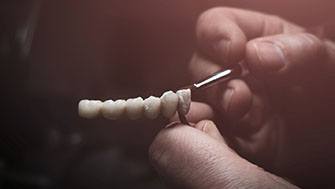
Dentures are made of two parts: the base of the denture and the teeth. Here’s what each component consists of:
- Denture Base: This is the structure that holds the replacement teeth in place. It can be made from a variety of materials, including acrylic, nylon, porcelain, resin, or metal. Full dentures are usually made with acrylic because they can be crafted to closely match your natural gum tissue. Partial dentures often use metal clips with an acrylic base to stay in place.
- Artificial Teeth: The replacement teeth are usually made from resin or porcelain because they both have an appearance very similar to natural teeth. Porcelain is the most popular option because it looks and feels natural and durable.
The Denture Creation Process
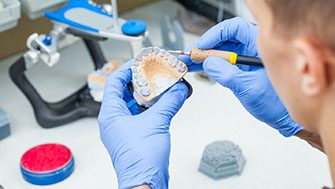
Each denture is customized for the patient, so the process takes numerous steps. Here’s what a patient can typically expect:
- Step 1: Your dentist will start by taking impressions of your upper and lower gums using a thick paste. Measurements of your jaw may also be taken. This is used to make a plaster model that is a replica of your mouth. The replica is used to ensure that your final denture is the perfect size and shape.
- Step 2: The case is then sent to the dental laboratory. This is where your restoration will be made. They will create a wax version of your gumline using the impressions your dentist took.
- Step 3: Artificial teeth are set into place using a mechanical device known as an articulator. The lab technician will make minor adjustments by shaping and carving the wax to ensure that it looks like your gums.
- Step 4: Your wax dentures are sent back to your dentist for a fitting. If they are approved, the dentures will be returned to the dental lab to complete the process.
- Step 5: As soon as the wax dentures are back at the lab, the technician will boil the dentures to get rid of the wax portions. To do this, the dentures are placed in a holding device called a “flask.” Plaster is poured in to maintain the shape of the dentures. The entire flask is placed in hot water to melt the dentures.
- Step 6: Holes are made in the teeth so the material can attach to them. A liquid separator is added to the plaster layer to stop the acrylic from sticking to it. Acrylic is then injected into the flask to replace the wax.
- Step 7: The lab technician will carefully remove the placer using special lab tools. Your dentures are then placed into an ultrasonic bath to remove any remaining plaster.
- Step 8: Any extra acrylic will be cut from the denture. After trimming, the denture will be polished.
- Step 9: Once it’s ready, you can return to the dental office for a fitting. If necessary, adjustments can be made to ensure that everything is working properly and comfortably.
Adjusting to Your New Dentures

Some discomfort is normal when you first get your dentures. Over time, your mouth will adjust to your new restoration, and they will end up feeling similar to your natural teeth. By sticking to softer foods and exercising your facial muscles, you can speed up this process. If discomfort persists, give us a call so we can help!
The Benefits of Dentures

There are all sorts of benefits that you can expect to experience when you choose dentures as a tooth replacement option. Here are just some of the most prominent:
- Makes it easier to chew your food
- Supports your facial muscles
- Prevents movement of surrounding teeth
- Increases overall confidence
- Removable for easy cleaning
- Improves speech
- Natural, life-like appearance
- Covered by most dental insurance plans
Understanding the Cost of Dentures

If you are ready to reclaim your complete smile and overcome moderate to severe tooth loss, dentures in Mount Pleasant are an excellent choice. Not only are they reliable and fast, but they are typically quite affordable as well! Each of our dentures is custom-made to fit your unique needs and preferences, but we will be able to provide a custom estimate during your consultation. In the meantime, keep reading to learn more about what goes into the cost of dentures in Mount Pleasant.
Factors That Affect the Cost of Dentures

When calculating your estimate, we will take into account several important considerations, such as:
- Preparatory treatments – If you need to have a tooth extracted or gum disease treatment to prepare for getting dentures, the cost of these treatments will naturally add to the overall price.
- Materials used – Our dentures are crafted from high-quality materials that are durable, reliable, and natural-looking, making them well worth their cost.
- Denture type – Depending on how many teeth you are replacing and what your preferences are, you may need a traditional or implant partial or full denture. Each option comes at its own price point.
Are Implant Dentures More Expensive?

Implant dentures are generally more expensive than their traditional counterparts. These restorations are anchored directly into the jawbone to replace the entire structure of a missing tooth. This provides implant dentures with unmatched security, stability, comfort, and longevity. Plus, with a lifespan of 30 years or more, implant dentures can potentially save you money in the long run.
Does Dental Insurance Cover Dentures?

Yes, in most cases, dental insurance will at least partially cover dentures. Many policies classify dentures as a “major restoration” like a dental crown, which may receive 50-75% coverage. However, it is important to keep in mind that every dental insurance plan differs, so speak to your insurance provider or a member of our knowledgeable team to learn more about the details of what yours covers. We always work on behalf of our patients to ensure that their benefits are being maximized.
Other Options for Making Dentures Affordable

For uninsured patients or those who are lacking coverage, flexible financing may offer an excellent solution. We would be happy to help you apply for a low- to no-interest payment plan through CareCredit. This way, you can get your dentures right away and split up their cost into smaller chunks that you pay back over time in monthly installments. To learn more about our financing options, be sure to check our website or feel free to give our team a call.
Dentures FAQs
Thanks to advances in modern dental technology, today’s dentures are more comfortable and lifelike than ever before. They can restore your smile and biting power to nearly what it was before you lost your teeth. However, it is perfectly normal to have some questions about the details of how they work and how to maintain them, which is why we have gathered this list of denture FAQs and answered them for your benefit. If you have a question about dentures that is not answered somewhere on this page, just call us and ask!
How Much Do Dentures Cost?
There is no set price for dentures because every case is different. The total cost of your new teeth will depend on a few different factors, such as which kind of dentures you are receiving and whether you will need any preliminary procedures, like gum disease treatment.
During your consultation, we will provide a price estimate based on your unique situation and discuss your payment options so you can achieve a brand-new smile without breaking the bank. If you do not have dental insurance, we also partner with CareCredit, a third-party financing option that allows you to pay for your treatment with little or no interest.
When Will My Dentures Need to Be Replaced?
Modern dentures are made from high-quality materials that allow them to last a long time. However, no denture is designed to last forever, except for implant-retained ones. When you are missing teeth and do not get them replaced with dental implants, your jawbone naturally begins to deteriorate. Your bone and gums begin to shift, causing dentures to lose their shape every five to ten years on average.
What Should I Do If My Denture Feels Loose?
As your jawbone shrinks over time, it is perfectly normal for your dentures to feel a little loose. Losing or gaining weight can also make them change their fit. If your dentures do not fit as comfortably as they used to, it is time to see us so that we can reline them. Normally, this needs to be done every couple of years as part of your regular denture maintenance. Getting your denture relined on time can even extend its lifespan. In the meantime, while you wait for your appointment, you can try using a little denture adhesive to keep it in place.
Should I Wear My Dentures at Night?
When you are missing teeth, you would do anything to feel like you have your natural teeth back all the time. As a result, many people do not want to go back to feeling the gaps in their mouths at night and wish to wear their dentures while they sleep. However, studies have shown that it is best to remove it for at least eight hours a day. This gives your gums and jawbones a chance to rest after holding the denture in place all day. It also allows you to clean your mouth and denture to prevent bacteria and plaque from building up and causing gum disease.
When your denture is not in your mouth, it should be soaking in a glass of lukewarm water or denture cleanser. This will prevent your new teeth from drying out and losing their shape.